
At the Gates Foundation, we believe in the transformative power of innovation. We are constantly pushing ourselves and our partners for new solutions to improve global health, to alleviate hunger and poverty in the developing world, and to improve access to quality education. By working together to apply creative thinking to enormous challenges, we believe that we all can fix some of the world’s toughest problems.
Innovative solutions to these problems often come in the form of new technology. But none of these innovations will make any difference in the lives of the people who need those vaccines, those seeds, those toilets, unless these innovative products actually reach them. So our ultimate objective is to make sure that the people we are trying to reach actually receive the innovative products that our partners are developing. This is part of a concept developed by the foundation called "Global Access."
Specifically, Global Access means that knowledge and information generated by our projects will be promptly and broadly disseminated and that the developments created will be delivered at an affordable price to the people who need them most.
To ensure that access, we adopt a comprehensive approach that spans the full product development life
cycle, from discovery through to delivery. We challenge partners to formulate sustainable strategies for
ensuring that the product reaches our target beneficiary markets while taking advantage of profits that
may be generated in other markets. An important part of these strategies is the management of any Intellectual
Property that arises from the work we fund. Such strategies allow for IP protection when it is
demonstrated that it will support and sustain the foundation's Global
Access objectives.
In the end, we want to make sure that the products developed with our funding actually enter the markets
we serve - the charitable markets - and is of real and meaningful benefit to those populations. For us,
that's where the real results lie.
This training is intended to help you understand the role of Intellectual Property rights in the
foundation’s approach to achieving Global
Access.

Global Access is a creative concept we came up with in 2003 that requires our grantees and partners to commit to making the products and information generated by foundation funding widely available at an affordable price, in sufficient volume, at a level of quality, and in a time frame that benefits the people we're trying to help. What role does Intellectual Property play in the foundation's approach to furthering Global Access? Intellectual Property provides a great opportunity to think creatively and strategically about how we can reach our ultimate beneficiaries. The careful and deliberate management of IP (patents, copyrights, trademarks, trade secrets, and rights in data) and the associated rights created or accessed through foundation-funded projects, is a critical component to achieving Global Access. Global Access commitments also apply to collaborations with for-profit entities. Whether it is a groundbreaking diagnostic tool or a new toilet that does not require a sewer connection or electricity, they are allowed to sell what they develop with foundation funding at a profit in the developed world, as long as the products are made available to the people who need them most.
In the spirit of establishing attainable and meaningful goals, the foundation strives to right size Global Access obligations for each of our partners. Global Access obligations are specific to each project, depending on a number of factors, including foundation goals and needs, project duration, engagement model (i.e., grant, contract or program-related investment), partner alignment, complexity and scope of project, stage, presence and nature of Background IP or Background Third Party IP involved, future use of Funded IP, and the structure and experience of the partners involved.
Although Global Access is specific as to its outcomes, it is flexible in its approach. The range of Global Access obligations may include a basic Global Access clause, the foundation taking a non-exclusive license to the Funded IP, or a requirement that the partner satisfy certain specific Global Access milestones. Such milestones may consist of establishing certain agreements among project partners, acquiring the IP license rights to particular technology necessary to successfully conduct the project and develop a product, or developing a project-specific "Global Access Strategy."
In general, the IP piece of a Global Access Strategy addresses:
In this way, the foundation relies on our partners to develop creative solutions, not just in terms of the
technology solution that may be needed. We also challenge partners to formulate sustainable strategies for
ensuring that the product reaches our target beneficiary markets. For the sustainability of the project,
we encourage partners to consider IP assets arising from the foundation-funded project in terms of how
they might create incentives for all the parties along the value chain.
The foundation also takes a pragmatic approach to the management of IP
Rights. Effective management of IP to achieve Global
Access still allows for commercial opportunities and formation of unique and powerful
collaborations.
Partnerships and collaborations are a critical element of the foundation's strategy because we believe in
their power to expand the reach and depth of our work. We seek collaborative partnerships with those that
have the tools and infrastructure to bring about the changes that will enable all people to live healthy
and productive lives. Partnerships enable us to draw on the unique talents, resources, and know-how of
industry, academia, and the public sector to better serve our intended beneficiaries.
IP
Rights are often seen as an insurmountable obstacle to a collaboration or partnership. However,
when structured from the beginning with the guiding principles of Global
Access, the perceived barriers raised by IP Rights are lowered, allowing for unique partnerships
that can immensely benefit the charitable markets that the foundation seeks to serve.
We recognize that many of our investments will result in new technologies, and that these technologies may
well have applications for wealthy as well as poor markets. Since our grant-making model provides for our
grantee partners to typically own the results, we want to talk candidly about how a grantee partner will
manage these potential IP assets to achieve project-specific objectives and to advance the foundation’s
charitable mission.
An "incidental private benefit" that might result from the commercial application of these dual market
applications is fine, as long as the charitable purpose of the project remains the central focus and top
priority for all partners. We also recognize that free market forces will not take care of our target
beneficiaries. In fact, that’s precisely why we’re doing what we do at the foundation: intervening where
the market is not reaching the poorest people in the world.
When strategically managed, new IP means we have new opportunities to assure products and solutions will
reach our target beneficiaries in poor or charitable markets.
Fundamentally, we respect our partners’ and others’ IP
Rights. We ask our partners to be aware of the IP Rights of third parties, working with them to
gain the access needed to make sure that the results of foundation-funded projects can be developed for
our charitable markets without encumbrances.
We welcome any questions and all feedback you have about Global Access. You can reach us directly at [email protected].
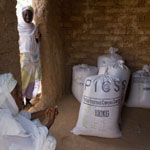
Cowpeas, better known as black-eyed peas in the US, are rich in protein and amino acids, and a major crop
for millions of smallholder farmers across Africa.
Farmers lose an estimated 25% of their crop to pests during storage after harvest. Conventional storage
methods to reduce crop losses involve expensive and potentially toxic pesticides. Because these storage
solutions are inadequate, farmers are required to sell soon after harvest, which results in lost income
due to low prices from a saturated marketplace.
In the mid-1980s, Purdue University and African researchers developed non-chemical, three-layer storage bags, called Purdue Improved Cowpea Storage bags, or PICS bags, which work by hermetically sealing cowpeas to protect against crop losses from pests. PICS technology offers a safe, affordable storage solution for farmers that can be locally manufactured and locally procured.
To protect their crops and allow for sales when the market is favorable, the PICS storage bag technology
needs to be widely accessible. This requires creating an effective and sustainable local supply chain so
that PICS bags are available and affordable.
At the suggestion of an African manufacturer and distributor, the PICS brand was trademarked to provide a
consistent, recognizable indicator of quality and effectiveness against pests and to encourage increased
adoption.
Managing the use of the PICS trademark by local manufacturers is consistent with the principles of Global
Access. The trademark provides the assurance of quality, allowing smallholder farmers to decrease crop
losses and increase their income.
Application of the PICS trademark helps protect against lower quality products from competitors, whose
bags could jeopardize the adoption of hermetic storage solutions as an approach to mitigate crop losses.
As of 2013, 1.6 million farmers have been trained to use PICS bags, and 2.5 million bags have been sold in
West Africa.
Using safe, effective, low-cost PICS bags for storage of cowpeas results in greater food security. In the
2012 to 2013 production season, PICS bags generated an increase of approximately $34 million in income for
smallholder African farmers. Recently PICS bags have been successfully tested in the developing world
against other insects, and will now be marketed for use for several other crops such as maize, ground
nuts, and soy.
Roughly 6,000 people become infected with HIV each day, or 2.7 million new infections per year. Worldwide,
an estimated 33 million people are living with HIV/AIDS. The foundation is working to make lasting
reductions in HIV infections and extend the lives of people living with HIV.
The foundation supports the improvement of treatments and diagnostic tools, expanding service delivery,
and promoting effective prevention methods. But central to this strategy of defeating HIV is work to
develop a preventive HIV vaccine. And despite enormous effort over more than 20 years, a vaccine that
protects against HIV has yet to be produced.
Historically, HIV vaccine scientists, advocates, and funders were hindered in making faster progress by a
lack of mechanisms to enable broad and effective collaboration in vaccine research and development.
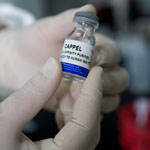
To accelerate the pace of HIV vaccine research, the Gates Foundation launched the CAVD
Consortium in July 2006.
The CAVD operates on the principle that accelerating progress toward an AIDS vaccine requires allowing for
the creativity of individual scientists, while providing a structure to enable data sharing and
standardized laboratory techniques and data analysis.
The collaborative effort includes a range of innovative approaches for designing vaccine candidates,
supported by expert central service facilities that enable investigators to openly share data and
materials and compare results using standardized assays.
To ensure a truly collaborative effort, members of the CAVD must become a party to a standard data and
material sharing agreement that allows for open communication among all investigators. Investigators share
data, methods, reagents, and specimens. CAVD members also agree to grant other members a right to use all
CAVD inventions for purposes of education and research in support of the development of an HIV vaccine.
In addition, members who receive funding must make a Global Access commitment that any resulting HIV
vaccine will be made available and accessible at an affordable cost to people most in need within the
developing world. These are the essentials tools that allow the CAVD to find a balance between open
collaboration and independent research that is essential to innovation.
Today, the CAVD involves more than 600 investigators from 103 institutions in 16 countries, all dedicated to designing a variety of novel HIV vaccine candidates, vaccine components, and advancing the most promising candidates to clinical trials.
Close Box
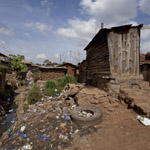
Poor sanitation, a leading cause of diarrhea, contributes to 1.5 million deaths of children under the age
of five every year. Chronic diarrhea can also hinder child development by impeding the absorption of
essential nutrients that are critical to the development of the mind, body, and immune system. It can also
impede the absorption of life-saving vaccines.
The need for better sanitation in the developing world is clear. Forty percent of the world’s
population—2.5 billion people—practice open defecation or lack adequate sanitation facilities, and the
consequences are devastating for human health as well as the environment.
The Gates Foundation issued a challenge to researchers to develop and create innovative and affordable technologies that will radically improve sanitation in the developing world. Under the Reinvent the Toilet Challenge, the foundation is funding research to develop waterless, hygienic toilets that do not require a sewer connection or electricity and cost less than five cents per user per day.
Global Access has played a role from the beginning of the Reinvent the Toilet Challenge to ensure that
these innovative solutions can ultimately have impact for those in the developing world that need them the
most.
The Reinvent the Toilet Challenge funded a diverse set of partners with revolutionary ideas and as a
condition of this funding, our partners made Global Access commitments.
One such commitment included granting the foundation a nonexclusive license to funded intellectual
property. The purpose of this license is to enable the intended products to be made available and
accessible at an affordable price to the people most in need within developing countries.
As long as Global Access is the primary goal, our partners can pursue opportunities for their innovations
in the developed markets.
As our partners’ efforts mature from their initial concepts towards a reinvented toilet, the Global Access commitments made at all phases of development, such as the granting of the nonexclusive license to the foundation, will help to ensure that these innovations will have made a difference for those most in need.
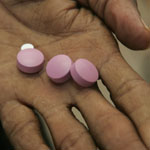
Close BoxTuberculosis (TB) is one of the leading causes of death worldwide. All of the existing first-line drugs for treatment of TB are at least 40 years old, and a strict daily regimen for six to nine months is required to cure the disease. As a result, many patients end treatment prematurely, so they are not completely cured and are at risk of developing drug-resistant TB.
The TB Drug Accelerator, or TBDA, was established to speed up the development of new drugs. A new combination could dramatically shorten the treatment to a few weeks, instead of six to nine months. It is an early-stage collaboration between major pharmaceutical companies and research institutions. The plan is to screen proprietary compound libraries owned by the pharmaceutical companies to identify new leads that can be optimized to yield new TB drug candidates.
The collaborators agree to share data and information that arises from TBDA activities, and to participate
in the further development of new drugs derived from lead compounds identified from the proprietary
pharmaceutical libraries. TBDA members also agree to grant to the other members a license to make and use
all TBDA inventions for purposes of education and research. This supports the generation of new lead drug
compounds for development into TB therapeutics.
As part of Global Access, the collaborators also agree that any new TB drugs developed as a result of TBDA
activities will be made available and accessible at an affordable cost to the people most in need within
developing countries.
The goal of the TBDA is to identify five new clinical drug candidates, in the hopes of creating a new combination therapy capable of delivering a complete cure in just a few weeks versus the current minimum of six to nine months.
Close Box
Only 25 percent of U.S. public high school graduates have the skills needed to succeed academically in
college, which is an important gateway to economic opportunity in the United States.
By focusing on improving education through innovation — and by building on and sharing effective tools,
strategies and standards – educators, school leaders, and non-profit partners across the country can
transform U.S. education.
Learning is improved when students are in an environment that adapts to their specific interests, pace,
and learning style.
With this principle in mind, Dr. Zoran Popovic, director of the University of Washington’s Center for Game
Science, founded a non-profit company called Engaged Learning. Engaged Learning is developing a platform
for adaptive educational material—including digital courseware and games—that applies user data to
continuously improve learning outcomes. Ultimately, it will be available for use in all educational
settings, with a focus on use by students with the greatest learning needs, including low income and
minority students.
The platform will have a teacher and parent portal that offers a full picture of students’ understanding
of material and progress. Teachers will have access to detailed assessments that can pinpoint collective
and individual learning progress in the classroom and provide real-time information on the effectiveness
of classroom activities. Parents will benefit from a direct and in-depth breakdown of what their child
understands and how their child learns.
To enable maximum impact, Engaged Learning made a Global Access commitment that the platform will be
available and accessible at an affordable cost to state agencies, school districts, public and private
school systems, and post-secondary institutions. Engaged Learning will pass this Global Access requirement
along to its distribution partners, whether they are for-profit or nonprofit entities.
Engaged Learning’s Global Access commitment also includes the development of a sales and marketing
strategy to increase adoption by school districts with the greatest need. In furtherance of Global Access,
the Engaged Learning platform itself can adapt to any curriculum and works across all major courseware,
operating systems, and device types, including mobile.
Because the knowledge and data generated are also valuable components of the platform, Engaged Learning’s
Global Access commitment includes making certain anonymized data available to the foundation and to the
education field for additional research and evaluation.
The first release of the Engaged Learning Platform was piloted at the Washington State Algebra Challenge in June 2013, in which the DragonBox Algebra game was ported to the adaptive platform. During the one-week challenge, students from more than 70 schools across 15 school districts used the platform, achieving an average mastery rate of 93% after 1.5 hours of participation. This result is in contrast to the 40% mastery rate achieved by the standard version in a comparable amount of training.
Close Box